Punk has always been an iconic musical art form that embodied the rebellious youth culture from the late 1970's English ghettos to the the present day city streets. In Dave Laing's article "Listening To Punk," Laing suggests that the Punk music genre is a subculture on its own, that the individuals how create punk music emphasize the message within the music by using less-than-pleasant musical tones with harsh vocals and screeching guitar riffs to ordain and subterranian values and ideologies of the punk movement of the time. In doing this, musicians are able to block out any "distractions" that could pull the listener away from the intentional meaning of the song. He states that if a listener is unable to understand or disagrees with the message being conveyed with the song, that an unintentional "gap" has been created because that is not the purpose of punk music.
By comparing punk music to popular contemporary music genres, Laing is able to separate the differences between the mainstream society and the punk subculture described through musical form. Since punk has it's own form of dress-code, hairstyle, lifestyle, values, as well as themes such as anarchy, death, violence, and public disorder, it is maintained as a response to much of what the punk music is conveying through the songs. It's shock value of vulgarity, swearing, screaming, and qualities opposite to that of other popular music. For some, the shock content found within a lot of punk music is blocked by some listeners; that "the shock defense', the inability to ' digest' shock content, produces trauma. For the audience of an artistic event, the trauma involves what Barthes calls a 'suspension of language, a blocking of meaning'." (Laing, 455)
It is at this point where a conflict has been created. If the shock value of punk music is too strong within the music, listeners will not listen and therefore not understand. If the listener does not understand, then that individual is exempt from the punk sub-culture of rock music. Even if the individual may like the idea of mohawks, studded jackets, combat boots, and tattoos but do not enjoy a lot of punk music, they become what society calls a "poser" and therefore damage or hurt the ideologies and values of punk music because they lose their meaning among the individuals who do not like punk music.
Much like the subculture groups of graffiti artists or skinheads, punks are usually comprised of youth who are misguided and unwanted. Rejected from the normal mainstream culture of society or refusing to conform with it, they turn to the aggressive, hooligan-style party rockers who are not just those kids who do what they want, who are overly aggressive, sniff glue, get drunk, and make fools of themselves; No, these kids are youth looking to share a common belief in the idea of a different society where they are in control and those who are part of the mainstream culture are ridiculed and destroyed. They do not exploit themselves or their individuality through paint, names, or by occupying spaces but instead by the distribution of music, concerts, punk parties, clubs, and more.
Punk is a deviant culture who explore their existence through music, dress, and lifestyle. Punk media has had a huge influence of the pertaining mainstream culture of different musical sub-genres namely punk-rock, ska, and Oi! Even though the punk subculture itself can be looked at as a parenting culture to the smaller sub-genres of punk era inspired music that in-turn became valued ideologies and themes that can be seen among subcultures of skaters, drug users, and other deviated youth groups, punk on its own is almost considered a mainstream sub-culture because of it's exploitation as a dangerous group of young deviants. Punk is not something meant to be feared, but embraced by the youth who feel unwanted, used, lost, and looking for an identity to be associated with. The punk sub-culture is almost like an army of rejected youth, youth who were once pressured to conform to the mainstream culture of society and refused. Their affiliation with one another poses itself as a larger embodying of the spirit of rejecting the mainstream culture that had rejected them. It is a parenting culture and a live one, it is more than just a style or a means of expression for the past 35 years, punk is a sub-culture that is here to stay.
Julian Assange and his group of hackers fighting for the access to classified information to make free to the general public has brought on a new form of journalism, new revolution, and hell for the information agencies that Assange and his team are attacking. The WikiRebels aims to influence a new age of informal press, encouraging everyone in the world to know what the governments work extremely hard to keep secret. This new platform of ghost networking, is a sub-culture of individuals itself, filled with anonymous people from all over the world in small internet cafes and study rooms. It is not a culture run on the idea that people are supposed to impose a certain image but instead is comprised of individuals who expose the truth because they believe that people have the right to know and make informed decisions.
Knowledge is the ultimate weapon and always has been. It has the power to change lives, change countries, and it even put a man on the moon. When it is withheld it is because it is deemed dangerous if it were to be exposed to the public, should it get into the wrong hands. Yet, much of the content on Wikileaks is full of incidences where the private citizen is the target. Be it from chemical testing to American soldiers executing innocent civillians, it still has the power to influence the way the public thinks, speaks, and consumes mass media as well as corporate products. What the consumer believes is right or wrong will depend on what they consume. If the private citizen watches a Wikileak video of a Canadian soldier killing children overseas, it changes the way they think about the Canadian Military as well as their country on an ethical standard. They may no longer support the Candian Military after video-after-video of the same footage. So it is clear how much of an impact Wikileaks can have in shocking the general public to the point where they feel like so much is wrong with this world that they are essentially overwhelmed with outrage; ironically over something that has so little impact on their lives that they'll probably forget about it the next day or two.
This sub-culture of a virtual collective spirit working towards a better informed society is indeed, a culture no different of those of Graffiti culture, where their means of expressing their ideologies and identity is nothing more than "vandalism." A sub-culture of delinquent hackers who appear like targets of high-school bullies, whose skill and ability to steal government documents without a trace is something one would think only God could do. Unlike graffiti culture, the individualist spirit is lost. The hackers become one identity portrayed by Anonymity, Guy Fawkes being the mascot for their terrorizing acts towards a better super-power by destroying the image of a corrupt one; thrown out in the open to be criticized, judged, and ridiculed by the eyes of the world; Almost like a metaphor for how close Fawkes came to blowing up Parliament in the belief he was bettering the people. He is but the front man that embodies the collective spirit of the anonymous mass looking for change. Beautiful isn't it?
Upon being rushed with this mass of information that sounds like the end of the world, people must feel like everything they had just consumed (all being negative) will of course mean negative reactions and negative results. We are shown the one sided coin, a negative spectrum over our governments, our armed forces, the food we eat, the things we listen to and what we watch as consumers. We feel targeted as vulnerable people living in a demanding society where everything is supposed to be running smoothly and for that we are enraged that the government in which we instill faith and trust is keeping secrets and betraying us. And for what? We cannot help but imagine why, but if it's being kept secret we feel threatened. It is all uncensored, unedited and, of course, cited by an anonymous poster who demands that the public see it clearly with all the facts and in complete context from a third party. We see these things on the internet but for what? For change? Aimlessly reading document after document of terrible reports on what you eat everyday, who the US has invaded and for what, where your tax money is going, and who shot who does not evoke change. We cannot just stop at awareness but we get the point. It is time to openly exchange ideas for solutions where to take action. The fight for free access to information is on-going and not just an sub-culture of online hacking vigilante journalists but people who believe in the collective spirit of bettering the planet and everything that is wrong with it but we must remember that everything has a two sided coin. We must not forget that information access can be dangerous and be used against us. Remember to read smart and think critically of what we consume in media and on a daily basis. Question everything.
In New York during March of 1987, the ACT UP (the AIDS Coalition to Unleash Power) was founded to bring awareness to the masses that there just wasn't enough being done about the AIDS epidemic in America and the world. The graphic logo SILENCE = DEATH had become an iconic logo for both the AIDS campaign as well as seen as a form of contemporary art. The graphic itself had comprised of a simply designed purple triangle with the propaganda style text below reading "SILENCE = DEATH." The triangle was chosen to commemorate the gay/lesbian groups who had suffered at the hands of the Nazis who forced them to wear the symbol of the purple triangle. This graphic campaign had set out with the intention of raising awareness through the public by means of creating t-shirts, posters, stickers, flags, and signs. Posters had been plastered to walls all over the city, shirts were worn, and bracelets were worn for the next following few years.
The ACT UP campaign had used several tactics to engage the public sphere. The use of repetition of campaign posters and seeing the purple triangle on the walls, on TV, hearing it over the radio and marketing the campaign products to expand awareness and even making counterfeit money, had the public's attention but still people were unsure of what SILENCE = DEATH meant. It was powerful but ambiguous and the Museum of Modern Art had refused to display any of the AIDS graphics within their exhibits during an art exhibition called "Committed to Print: Social and Political Themes in Recent American Printed Art." Protests ensued.
Douglas Crimp and Adam Rolston's article "AIDS Activist Graphics," had pointed out that even though the AIDS graphic campaign had significance and meaning in time, it does not reflect the values and ideologies of the majority culture of the time. "A current crisis is perhaps less easy to recognize, since they 'see' only what has become distant enough to take on the aura of universality." (Crimp, Rolston, 363) This suggestion as to why the Museum of Modern Art has failed to recognize SILENCE=DEATH as a movement towards the improvement of the human condition bases it's claims on the premise that it is not the issue or events that stand out but rather the artistic style of graphic imagery that has an effect on people, not the other way around.
The over-use and exploitation of symbols and campaigns such as ACT UP and their graphics by talented and inspired graphic artist ultimately gather the attention they intended but had lost the traditional meaning of what it meant to stand up and do something about AIDS. Instead it had become an art show for who could come up with the better picture and what that picture was worth. The AIDS campaign had been successful in turning the heads of people who they came across but once their theme had become a mainstream topic of debate, the meaning is lost or becomes irrelevant.
By way of example, the use of graphics to convey a meaning or tone is lost when it becomes convoluted within the media that is representing it. If you put on a shirt that says something meaningful, it's just a meaningful shirt, perhaps even a cool one. But the idea that you're shirt is cool is besides the fact that it means something significant; however, it is all the general public will see or think. It becomes a commodity in a consumer society in which it's popularity comes down to credibility and aesthetics instead of the campaign or product had been intended for.
Campaign movements come and go, each with their own specific styles of media consumerism, propaganda art, street credibility, political involvement, and public opinion and awareness. Yet after decades of being old news, all that remains is the media that is left behind to be shared again in the future for future generations to evaluate and question for themselves. Ironically, these individuals will see the meaning behind the media far better than those who had exploited it in the past as being part of the mainstream culture and fitting in with the crowd. We have nothing but our sense of "cool" to thank for that.
What does it mean to be fashionable? Why does it seem like wearing dresses made of money, or obscure looking pants, or hats that no one has seen in almost a hundred years has such a profound effect on how people look at it, who wears it, and what it means to be "in-style." We change our styles from time to time, buy new clothes, and see what matches what, but really, who are we trying to impress? The way a person will dress says a lot about their character, what they might do for a living, how much money they have (or don't), where they're probably going or coming from, and whether or not they look like that everyday will depend on their character.
Bill Cunningham New York was a documentary focusing around the life of fashion photographer Bill Cunningham who'd been taking countless photographs of men and women on the streets of New York for decades. Yet, he does not photograph anyone. He looks for the clothes, the hats, the shoes, and trousers. He's out looking for individuals who aren't afraid or ashamed to stand out from the norm of how people dress to express their character in a barrage of colors, styles, and complete disregard for the modern day suit-and-tie image that is seen everywhere everyday. Cunningham had built a reputation with some of the oldest and well known fashion designers of his time (and he's a pretty old dude). He's seen all the styles before and he looks for copies and inspirations. What some people had claimed to have just designed, he will send a photograph of the same outfit or pattern from his collection that he'd taken nearly 50 years before.
Bill wasn't social from what I could tell. Nobody who knew him could say much about him. He didn't talk, he only photographed. He was old-fashioned and used an old camera with film prints, physically cutting out and laying photos on a magazine spread. Yes, he was different, but what Cunningham was looking for had said a statement about modern society; that modern society was really losing it's form for what was different, that people all look the same, and wonder why people feel the need to dress to fit in or to look "neutral."
In T.R. Fyvel's article, "Fashion and Revolt," Fyvel suggests that fashion revolt dated back to the post-war English culture of the 1940's in response to American styles. Fashion was seen a social protest had involved individuals dressing how they liked, regardless of reaction or public opinion. These individuals were often seen as the rejects, the groups that were not respectable, and not socially acceptable. At first, they almost seemed like a gang by dressing the same and representing the counter-culture of the era, but as time had progressed by the 1950's, it was clear to society that even after years of continual use of the "Teddy-boy" style, that youth groups of unskilled and poor workers would no longer be exempt from the society that offered pleasures to the wealthy and the famous who dressed "appropriately with class." They would instead be found as conservative rebels who were "cool" for the first time ever. The styles of the Teddy-boy were altered and changed with time to produce attractive fashion styles for both men and women bringing together the perfect mix of the working class meets first class clothing. It wasn't formal, but it wasn't ugly, they wore these clothes on a daily basis which grew rather attractive to the one's in rags, and the first class women who were taught to dress proper their whole lives.
The way people dressed had allowed the way other people to expand on who exactly this person is, why they dress the way they do, to deem them socially acceptable or not. If you can't change your social class, change your clothes. "...Even in the dead-end districts of London, there had been radical social change. Boys and youths working in unskilled jobs were no longer loutish but searching to take part in ordinary mid-twentieth century city life." (Fyvel, 287) Fyvel's quote describes the result of the fashion revolt of the Teddy boy culture of the post-war society. It had brought on a new era of how people were expected to dress, how one could choose what to wear without care or worry of what others thought.
Like other forms of sub-culture, the fashion induced members of society are looking for an identity within their clothes the same way graffiti artists look for one in their name and their paint. Even if fashion is more of a victim-less crime than graffiti or the sex-trade, it offers a place for individuals looking to be the same, looking to be different, to be formal, be casual, be rich, or poor. Clothes offers the person a chance to represent their identity through physical subtly and threads, it even offers the chance to be someone you're not, even if only for a short while.
"When writers spray their names on a wall, they appear to leave a part of themselves there too. Almost like a stand-in or double, the name embodies and represents the individual who wrote it- 'there's a bit of you there', It's like you being there." (MacDonald, 314)
It is easily arguable that the graffiti subculture is not comprised of people but only of names. The names that represent the spirit of the individual being in more than one place at one time, at unreachable highs and even at greater lows. It is a sub-culture that prides itself in its "writers" as alter-ego personas capable of networking with each other on nothing more than brick walls. It provides more than an escape but a thrill for writers who made their identity that is expressed through their paint. They become affiliated with one another and put differences aside to only see the street writer that embodies a name that I'd probably seen before somewhere down at 16th avenue and Newkirk Dr. and they become respected in that way for reasons of claiming public space, and leaving their mark.
In a sense, these anonymous individuals are claiming public space as their own, as we think back to Clark's theory of social spaces being won over for people who are part of a social construct. This ultimately allows nearly anyone to essentially gain satisfaction of being well known if not famous by name or symbol. Their name is a virtual reinvention of their identity as an image. It is from that image that people are able to open express themselves as well as have others openly question it. The social space dominated by the Graffiti subculture and on travelling mediums such as trains and trucks allows the individual of the claimed space an extraordinary sensation of having their identity travelling to different places to be seen by different people, and in a way, claim that space even if it only for a little while.
The Banksy film "Exit Through the Gift Shop" had given viewers the chance to see the rare moments of graffiti as it is being plastered by on by a graffiti artist named Shepard Fairey as well as Banksy himself. Fairey's iconic OBEY posters have had a huge impact on the street art community for his use of propaganda style of repetition and stencil papers. What exactly this film intended to capture, I'm not entirely sure as it passed between several subjects of interest. What I did see from this film was a man named Thierry (Mister Brainwash) profiting huge off of the cheap exploits of what street art is portrayed as; something tossed together with some pictures and sells it as one picture. Thierry, did what Fairey had showed him to do and with Banksy's encouragement, Thierry set out as Mister Brainwash, a man with a camera on a sticker who eventually sold works for thousands at his art exhibition within a short time.
This is not what street art is about according to the accounts taken in Nancy MacDonald's article: "The Graffiti Subculture." It’s about creating an identity through the careful selection of a meaningful word or name and placing it in significant places of influence or social space. "You become more than yourself in this subculture because you escape the need to represent yourself. Your graffiti 'speaks for you', freeing you from the features or factors that might normally hold you back." (Jel, Macdonald, 313) This quote made by Jel during an interview with Macdonald explains that graffiti is more than just street art but is lived as a lifestyle with an alter-ego of expression; that graffiti is not for a profit but to fill the public space with a personalized version of one's own work.
I don't believe that bathroom graffiti can fall under the same category, at the same time, every time I find myself in a stall with time to kill *ahem* I love reading what those who'd been there had to say or speak what was on their mind. It makes me wonder what type of people these people were like. Yet, they are vandals, regular people with nothing better to do that leave their comment on the wall next to them, some of it dating back 20 years or more in the truck stops off the highway. I feel like it adds a history to the building itself, to know that these people existed and that they had a sense of humour. Even though it makes the place look run-down and gross, it provides mild entertainment in a small shared space where hundreds of individuals pass through regularly.
But are those who instil bathroom stall graffiti sharing the same values and ideologies of the street graffiti subculture? It's hard to say if seeing the same name or brand everywhere could just as equally represent the same individual spirit as the one who scratches a dick onto every wall in every public bathroom. There's a fine line to draw what is considered vandalism and what is art. Although graffiti is usually considered illegal, its product can be remarkable, inspiring, cynical and satirical in the face in the normal society.
I had always thought of myself as a weird kid in high school. It had never occurred to me that a lot of people probably didn't see it that way. I had friends, we did stupid shit together, we partied, we laughed, we traveled, and partied some more. Yet at the same time, I could not help but think that it was possible that my public self was different than the one I shared at home with my family or my closest friends, that I had changed my identity for the world every time I stepped outside. I was Mark, an average kid growing up in the suburbs in a high school full of people being social and finding similar interests and sharing similar hardships with those I surrounded myself with. I was a different person. But what defined who I was if it meant trying to find out what's the coolest thing, what's the newest product, what's the most significant thing that happened in school, or in news? We feel pressured into maintaining a standard about ourselves every time we walk outside. This comes down to how to act normal, how to be professional, how to be awesome, what to buy, what to where, and what to do. Yet an ideology of a mainstream culture seems unappealing to most because everyone wants an identity that is creative and different than everything else. That is when everyone jumps on the bandwagon of "Being Different," and suddenly, being different is the new mainstream culture.
In Sarah Thornton's "The Social Logic of Sub-cultural Capital," she suggests that youth share sub-cultural ideologies that differentiate from the "parent culture," in which they imagine a separate identity that is asserted in the mainstream culture in order to associate distinctiveness within society. Ideologies that follow what is cool come into conflict when what is cool becomes affiliated with mainstream culture and loses its value among youth groups over time, with popularity, and with copies. Yet these subcultural ideologies shared among youth is routinely sought after to make profits. Club owners, DJs, musicians, and clothing designers all look for what is considered "hip" to attract their audiences and defined as sub-cultural capital. It is money generated by the attractiveness of trend valued and idolized by specific sub-cultural communities. If no one's heard of it, it's underground. Once it's heard of and popular, they become mainstream. Once it's used for generating profits and changing ideologies and values to cater to the majority, it becomes a sell-out.
By way of example, Shepard Fairey's OBEY The Giant, had grown into an economic marketing success compared to it's spread in the small town skater subculture of the late 1980's when he first created it. His style of street art had focused more on the aspect of how propaganda worked compared to what was being propagated. Over time his street art conceptualizing Andre the Giant as propaganda spread in parts all over North America and the world over time as it gained popularity and notoriety for the past two decades and getting involved with politics; one notable work being the 2008 HOPE poster for Obama’s political campaign. His work had gone from underground to mainstream, yet he maintains the value and ideologies as a street artist and is well respected in the urban art culture. His designs that he sell can be seen as cultural capital but well reflects the subcultural traits and "what is hip."
As we get older we put away our childish things but does this mean that we give up our sense of what's cool and why we should still care? The parent culture is exempt from allowing "cool" within it's borders and anything that should cross will become "not cool, man." Graffiti and street art are expressions of youth looking for identity and independence within a world that doesn't care for them, within a society that won't provide for them. When people say that graffiti is vandalism, it comes down to perspective. It's easy to call something vandalism if you don't like it being there. Obviously, there's going to be people who don't agree with their walls being painted but it's no different than the propaganda of what to buy, what to do, where to go, and who to be that we surround ourselves with everyday even within our own homes.
In the new millennia where there is nothing left to explore, no need to hunt or gather, and with no other means to differentiate people without being called racist, there is but no choice to formulate an identity with what you do, how you dress, what you drive, and how well you interact among social groups. This is the definition of consumerism and it's takeover of North American markets for the past century and a half; but in the wake of the 21st century, the view of this kind of lifestyle was taken into the bigger picture and analyzed by consumers who then decided that they would protest the way of life for the middle class. In Andrew Heath and Joseph Potter's article "The Rebels Sell," Heath and Potter scrutinize the hypocrisy of the anti-consumerist in the capitalist market, poking fun at the idea that they claim to be anti-consumerist but do not understand the nature of consumerism at all.
By way of example, Heath and Potter's use of Fight Club as a model for anti-consumerist popular culture of the time had "critiqued consumer society" or simply put "noticed that everyone aimlessly follows capitalist values and buys the things they want instead of what they need." Well isn't it human nature to only desire the things that we don't already have? This sub-culture of following (or not following) the protesting of consumer society stands alone in the balance and creates a brand image of itself by essentially targeting large corporations that run the markets and the governments because of how badly money corrupts. It’s stupid to say that one is a bad person for buying the want they want to make them happy. We try to talk about this like it's a social issue when it isn't but is rather the progress of society that drives and motivates people to work, to produce, and create new and innovative things every single day. When one person buys something big and expensive for any reason even if it's "just because they can," that item which they've longed for is now theirs even if they've worked the worst job to get it. In turn, they having done so will have little to no effect on your life so why bother? Why should this be frowned upon? Someone's got to get the job done. Without capitalist consumerism, there's no way modern society would be as creative, widespread, ravished with luxury products available on demand. Surely there's a way to keep everything we buy new and edgy with class and style to continually urging us to burn our hard-earned cash while keeping the profiting governments and corporations in check. Unfortunately the world doesn't work that way.
As for protesting capitalism, let’s not leave it in the hands of the Anarchists responsible for the damage we see at events such as the G20 summit in Toronto or the playoffs in Vancouver. Breaking windows is not in the spirit of anti-consumerism but is rather just costing everyone more tax dollars to fix. How exactly is a protest like this organized? Through consumer products like iPhones, smart phones, laptops, and social media outlets; the most glorified and media exploited products to date. Why are people angry? Because everyone likes to by these consumer products that make people rich? At this point I cannot help but shrug at the paradox that I am faced with.
People always aim to make a profit, no matter how little or large. In the wake of the consumer society that everyone finds themselves trapped in, there is no escaping the media consumption that defines what is special and what isn't, what's what, and who is who. It is simply something that we all have to go along with. If one dares to challenge the cruel perspective cycle of capitalism, their own will become idolized and in turn very popular. What does very popular mean? It means very easy to make money from. We sell the image ourselves whether intended or not.
The anti-consumerist culture may some contradictory to its motives and even somewhat silly, yet at the same time, this sub-culture within society is comprised of individuals who seek more than just material satisfaction. They demand more out of their lives, their jobs, and those around them. What they're looking for to make them happy may never come, probably because they don't carry it on the shelves at Wal-Mart or because it's difficult to find a good Fight Club. Even in the shadows of the corporate-run society we maintain our separate identities hanging by the threads of our made-in-china $100 jeans because we cannot seem to find any other way due to mainstream media irrelevancy.
After reading Julian Sher's article "Sex Trafficking: A National Disgrace" which pointed out the ignorance of Canadians to this on-going problem that occurs in their own backyards, it was clear to me that, this, like any other national issue that constitutes a "social problem" has the federal government looking the other way. Julian had raised the points that a crime such as this is handled too leniently compared to the United States which has task forces specially trained to handle crimes involving the prostitution of immigrants, children, and women but why doesn't Canada? Does living here somehow mean that just because we free and live in a well developed society that these sort of things don't happen here?
Obviously, we'd be pretty naive and stupid to think that if it were the case. It would be like assuming something doesn't happen behind a closed door. But why doesn't anyone do anything about it? Because, we're a society built on the idea that we're safe, living in a country where things like the sex trade isn't portrayed on the news every night, we're not haggled in the streets being asked if we want erotic massages or to "be loved long time." Instead, we believe awful crimes such as these go on in far away countries and only hear stories. There was even one Canadian named Benjamin Perrin, a faculty of law at the University of British Columbia and a notable hero acting towards helping sex trade victims and putting an end to the sex trade itself in Columbia was unaware of the crime back home until he recently heard of the sex trade in his Calgary hometown. His book, "Invisible Chains" from which Sher bases his facts and article from, aims at awareness for this ongoing issue that is being ignored.
The fact is, these people come to Canada or move to another city in Canada looking for a new life but are swindled and manipulated by the people who claimed to have helped them achieve that goal. These, like the youth of the skinhead culture, are misguided and unwanted. With little self-esteem and an authority/parent figure, these youth eventually feel like they belong within a sub-culture such as the sex trade where they rely on their pimps to take care of them. It is because of this that these youth and immigrants feel they have no choice because they have been coerced and threatened into staying in business.
I think that as Canadians living with the issue for such an extended period has only added to the ignorance that plays a major role in the sex traffic culture. The fact that this sort of thing goes unnoticed everyday in the city streets is saying something about Canadian culture itself. I don't believe that people are accepting of atrocities such as this but rather accept the idea that it simply cannot happen here. Well, it simply does, and there's very little that's being done about it. Like any sub-culture within a society, there are numerous factors and similarities that bring groups of people together for a reason whether or not they do it willingly. At the same time, the sub-culture of sex trafficking has very different motives than any other sub-culture that we have looked at. It is cruel, immoral, and extremely unfortunate that this sort of crime is not well-aware. The sex trafficking sub-culture of Canada is massive and country-wide. Canadians are sold for money online and in-person and yet, the one's who are victimized are subjecting themselves to this continually because of a sought after solution as to who's going to look after them. After years of ongoing sex trading on Canadian soil, it is time that people not only stop at awareness, but take action against the underground sex trade in Canada. We can thank authors and activists like Benjamin Perrin for helping us do that.
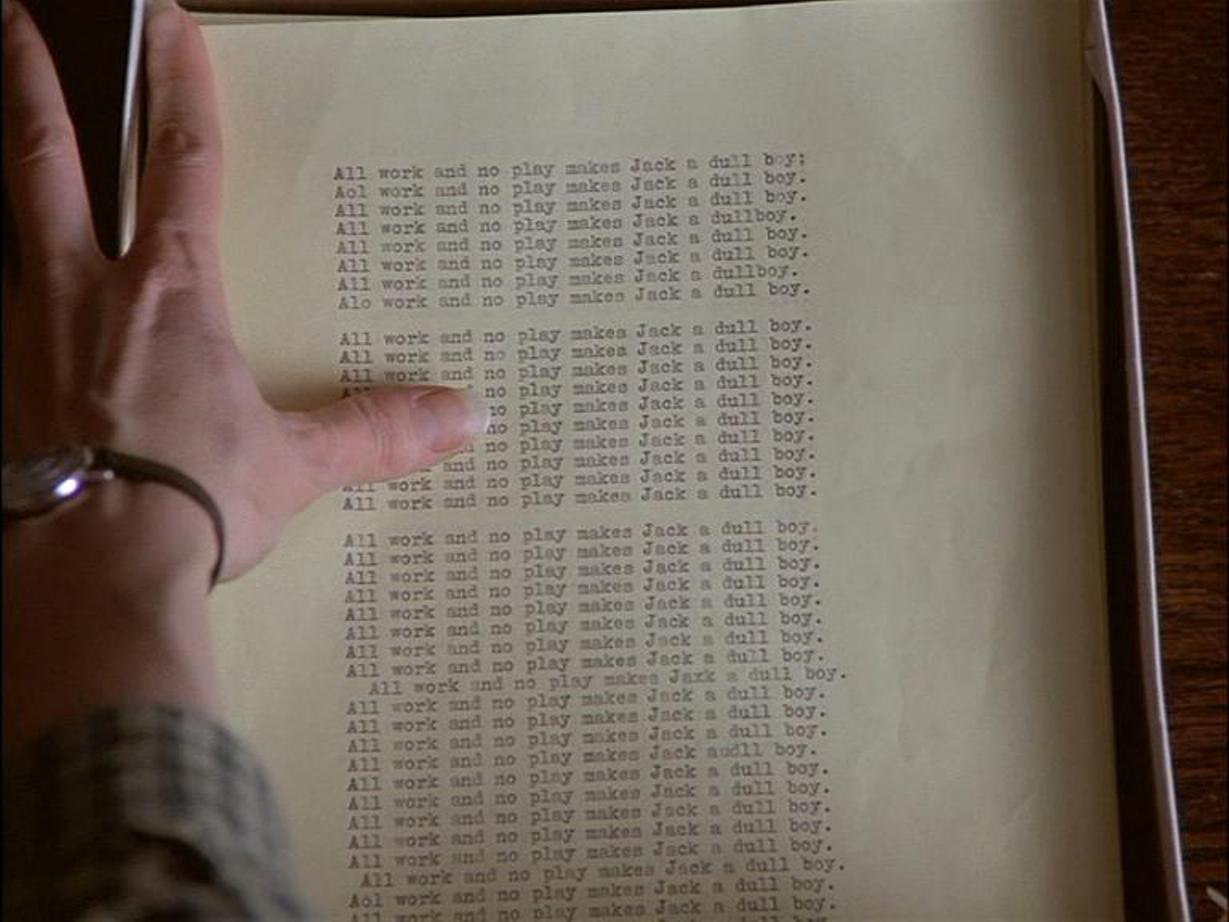
All work and no play makes Jack a dull boy. But why work so much? For cash? Why do we need more cash all of the time? To buy the things we want to make us happy. The worlds of work and leisure have tightly entwined themselves to be the functioning purpose of society and the duty of the individual in order to set long term goals and give us reasons to want to work. Jock Young explains in his article, "The Subterranean World of Play" that every society has a series of subterranean values that involve the search for new fun and excitement all of the time no matter when or where. Subterranean values hold a strong place in society where specific cultural values are celebrated in the form of holidays, carnivals, and festivals in which these values are expressed and prioritized over the normal work day. When no fun or excitement is prevalent in a strict society,
"The juvenile delinquent then, is seen as not an alien in the body of society but representing instead a disturbing reflection or caricature. He takes up the subterranean values of society: hedonism (play being the only intrinsic good), disdain for work, aggressive and violent notions of masculinity, and accentuates them to the exclusion of the formal or official values. Moreover, he is encouraged in this process by the fictional portrayals of mass media of heroes who epitomize these values." (Young, 149)
Young's theory of the need to fulfill the subterranean values in any society are especially predominant in Vincent Paronnaud's 2007 film "Persepolis" which focuses on the upbringing of a young Iranian girl during the Islamic Revolution. In the film, the main character Marjane tells of her rebellious life growing up and buying smuggled Western music which was highly illegal for fear of spreading Western influence and culture. Yet, Marjane told of her parents deviating away from the social norm in order to celebrate the subterranean values and holding parties that often required breaking the law to have fun.
Young suggests that the subterranean values of leisure are reinforced through Westernized media, which in turn fuels the drive for more of a need for free time and procrastinating on work which in turn provides a negative look at people who spend large amount of time having fun. At the same time, Young also suggests that the true man find his identity through play and leisure, where a utopia of his own imagination is created free of mental anguish or conflict.
If we were to look back at Cohen's original theory of the development of one's character through past experiences which create their identity and where they fit in, does this also mean that mainstream media plays a major role in the influences and ideologies put in place from such a young age. Everything that people subconsciously worry about in a social setting is often due to the fact that mainstream media has put in place a set line of rules and codes of conduct that effect how people act in public settings. This can be from anything we wear, talk about, listen to, do, or don't do. Without a media based generalization of things we little about, society would not have much to run on but the basic values and morals developed within their own home or community with individuals like themselves. Like Marjane in Persepolis, Marjane looks to deviant means of absorbing Westernized media because she feels that the media in her time and place is inadequate, wrong, or shows general disinterest. When leisure and fun are hard to come by, it can be expected that devious ways of celebrating subterranean values will emerge out of a reflection of an oppressive society.
When is something officially classified as a subculture? What really defines the difference between a culture and a subculture and how does one know where to draw the line? Since there is a substantial difference between cultures and subcultures there also remains particular ties to the "parenting" culture that take form of certain activities, values, and uses for certain material objects that may be used differently or changed in such a way to make them distinctive and either loosely or tightly bound with the parenting culture. (Clarke at al. 94)
Skinhead England, as portrayed in "This Is England" by Shane Meadows takes a dramatic look at Skinhead culture in the early 1980's England. The film follows the life of Shaun, a 12 year old school boy who is picked on at school and growing up in a single parent household without any real role-models or money. Shaun is quickly accepted into the Skinhead world upon his encounter with Woody and his small gang of friends where he finds acceptance, fun, and a mentor whom he'd been missing his whole life since his father's death at war. It is learned in the movie that original skinhead culture had emerged out of the reggae music scene in the early 1970's and quickly accustomed itself to many rag-tag groups of displaced and misguided youth.
Some groups had taken to the extremes by adopting the skinhead image to be used in a more racist connotation with a darker intention. The more notorious nationalist skinheads were a subculture of the skinhead culture which was the subculture of hegemonic urban English culture of the 1980's. Hall's findings in the fact that subcultures co-exist and exist within the dominating culture they originated from can be applied to Meadow's film by taking a look at the rough separation of the group when the introduction of Combo arrives. Since Combo had shared a more nationalistic demeanour, Woody, a more warm-hearted and level-headed character of the same subculture of skinheads, decided to leave with half of the group who decided that they did not agree with the nationalist agenda, while young Shaun chose to stay behind.
This is a perfect example of the established differences between the subcultures of skinheads. It is most likely that from a hegemonic perspective the skin heads are viewed as racists because of the many stereotypical views against them. Hall and company suggests that the values supported by a subculture have the potential to be rejected or frowned upon by the dominating culture, leading to a struggle of "repertoire and responses - ways of coping as well as resisting." (Clarke et al. 96) This view is portrayed in the film as the nationalists waged their "war" on the immigrants of England which consisted of minor illicit activity counter productive to their actual goal of being achieved.
Hall, Clark, and company also argued that subculture did not only involve a mentality and a way of living, but also physically "earned" or "won" social spaces through means of being part of a sub cultural construct. For example, in This Is England we found that Shaun, after joining the group of skinheads found himself socializing with individuals of his sub cultural group under the bridge, in the restaurant, Combo's apartment, the abandoned houses, etc. All of these spaces represent the physical space won over by Shaun as a result of joining the skinheads.
As we can see, the Hall's shared theory is can be seen prevalent in many subcultures from then and now. It can be applied to any basis of conflict within groups sharing the same broad identity and it is what is exploited as the strongest value is fought to be heard and submitted to. This Is England tells the sad story of a young boy caught up in a game he didn't belong to. It takes an in-depth look at the skinhead subculture and viewed it's two opposing sides and elaborates on the social, political, and influential effects of sub-groups within subculture. Based on what is evident here and in everyday life, we can generate a better understanding at sub cultural groups and make distinctions between them.
The 1995 film "Kids" by Larry Clark poses itself as a drama in which an in-depth look into the urban life of street youth is taken to the extremes as substance abuse, physical violence, and sex creep their way into the lives of a group of adolescent teenagers. Is this image of really all these kids are up to these days or are we just exaggerating? Youth cultures of the 1990's are not so different than the youth cultures of today. The awkward stages of growing up, rough childhoods, outcasted, and disposed of all count a factors toward youth taking to the streets where they find themselves together, where they form a unique bond functioning something like a family that accepts them and looks after them.
Milton Gordon's article: "The Concept of the Subculture and its Application,"takes a look at the factors within the subculture that effect different individuals within the same grouping. Gordon's theory on sub-culture and its application suggests that individuals that are part of a culture can be studied more accurately by categorizing "small units of subject matter" that are attributed to the way a person acts and thinks. These units can be factorized by variables such as ethnic background, religion, social class, economic status, and region. These individuals then bend the way they act and think based on a combination of these external factors before presenting themselves to a subculture with a set way of living and behaving. These are what Gordon calls a "unit" which generates a distinction between separate subcultures and separate units in the same subculture.
Maybe, with the help of Gordon's theory, I can try to understand the reason behind what gave these kids the idea that they're invincible and that anything they do won't have negative effects at some point in the future. Well, like Telly said in the end, there isn't much to live for and when you're a kid, nothing else really matters. I'd like to ask why this is so. Is growing up as a middle class white kid in a small Canadian suburb not the same as growing up as a lower class black kid in New York City? I doubt it, but is that any reason for them to possibly enjoy the same activities, same values, and deal with similar problems? It is quite possible that the separate variables of region, social class, and ethnic background have interwoven to become something that is portrayed only through one's character. Whether this character emerges as being good or bad, moral or immoral, it all comes down to the small units of subject matter that depends on the environmental variables that surround an individual during their young life.
In a movie like Kids it is easy to suggest that the immoral standards and the everyday activity of sex and drug abuse among dozens of young children is due to the fact that none of these children has grown up with proper values put in place by positive family influence, role models, or some other form of positive reinforcement to make these kids feel like they don't want to do these sort of things at such a young age. At the same time, it is difficult to tell exactly how every character in the movie turned out the way they did. When you think of fifteen year old kids; dope fiend, sex addict, and date-rapist aren't the first things that come to mind. Times sure are changing.
Since there have been people, there have been cultures; within cultures there are subcultures. But what factors play a role in the creation of subculture? In 1955, a man by the name of Albert Cohen suggested that within these subcultures exists individuals who share common beliefs, judgements, and conflicts; that these individuals choose to cope with these problems with solutions derived from their moral standard (which varies heavily upon social upbringing). When external elements challenge individuals on a daily basis, they are often countered with a solution or an action in which differs than that of individuals located elsewhere; that elsewhere, different problems arise require different action, therefore shaping different individuals.
In Cohen's article, "A General Theory of Subcultures," Cohen explains that upon the assumption of this theory that the self interests and moral standings of another will distress and aggravate the solution/coping strategy/action used to deal with the situation in the first place. Thus the social implications of this nature, in an attempt to avoid this, generates a community of individuals sharing the same ideologies, conflicts, worries, and pleasures where one is not challenged by peers or challenged with a conflict alone. The need for affiliation and pressure toward conformity lead individuals to one another in a new age of digital and social media connection. Even still, within these communities remain individuals who may challenge the greater ordeals or matters in which the larger body of people find important or prioritize. The dissent within these groups often leads to the alienation of individuals which is the catalyst for deviating subcultures comprised of outcasted individuals who pride themselves on their identity different than the majority and practice routines outside the social norm.
Cohen's theory is backed up in Jean-Luc Godard's 1960 film "Breathless." Godard portrayed the story of a criminal deviant named Michel Poiccard, a cop killing car thief, attempting to convince an American woman to leave France with him to hide in Italy. These two outstanding individuals struggle to live in a normal society, where their hardships, aspirations, motivations, morals and standards differ greatly than that of the general public in the movie especially within the decade that it had been made in post-war Europe. The contrast of the film relative to Cohen's theory made only five years before the film, poses a strong truth. Bewteen the two characters, Michel's strong atrraction to Patricia seems to be loosely based around his facination with her foreign identity. Her strong sense of Western culture and his egotisical view of women in comparison had audiences a little surprises that Patricia had considered leaving with him, however this is not the point. Michel is coming from a social background life of a deviant criminal mind. He is met with daily challenges of a criminal in which he struggles to find solutions for throughout the movie. The everyday challenges of a criminal may not correlate with the daily challenges of a small boy picked on in school or a rich man who goes home to women and champagne. Michel's life is comprised of hiding, theft, and money laundering while at the same time trying to hold onto his sense of humanity through Patricia, an American journalist working abroad in France. Michel's need to have the woman he likes with him in Italy had ultimately costed him in life when Patrricia's moral concious, working on a different levels of morals similar to the population of the majority, had called the police to report him.
There is no arguing that had Patricia's moral upbringing as an independant young American woman had differed greatly from that of Michel's, a mind who's only morals are worrying about criminal intention and getting caught. Going back to Cohen's theory of social uprbringing from different experiences and values, these types of deviant individuals such a Michel emerge out of steps taken to try and solve a challenge or problem that they are encountered with, like Patricia when she was torn between leaving with Michel or reporting him to police. Ultimately, her desicion to have him arrested prevailed out of a moral implication prevailant in the dominant culture of the majority.
In an article written by Chris Anderson and Michael Wolff, "The Web is Dead. Long Live the Internet," the two discuss the slow death of the world wide web as it is slowly phased out by smartphones, new technology, and Web 2.0. With the new emergence of applications on iPhones and smartphones such as Blackberrys, it is easy to agree the furture of the web is obsolete. People no longer depend on laptop or desktop computers for directions or social networking. They are able to find things like that while on the go or nearly anywhere with a dataplan or WiFi connections. Is this neccessarily a bad thing? The article seems to think yes and no.
“Sure, we’ll always have Web pages. We still have postcards and telegrams, don’t we? But the center of interactive media — increasingly, the center of gravity of all media — is moving to a post-HTML environment, we promised nearly a decade and half ago. The examples of the time were a bit silly — a '3-D furry-muckers VR space' and 'headlines sent to a pager' — but the point was altogether prescient: a glimpse of the machine-to-machine future that would be less about browsing and more about getting." (Anderson,Wolff, 2009)
The Web, they say, is shrinking and rapidly. It was an inevitable fate brought on by the capitalist innovators of the new media. As the innovators come out with new technology to sell like iPhones and smartphones, the past generation of technology is almost immediately phased out. It becomes irrelevant, forgotten, and a dinosaur among people and their peers. New HTML data is the furture of the internet. There is no more coding and fancy ways of typing out a paragraph to publish it. It is all done automatically. Easy and simple and that is the way people want to live and experience the Web these days especially when they are using it on their phone in the middle of no where in particular.
People want things brought to them and given to them. Nobody likes to look and browse through anything. People know exactly what they want and when they want it and they are more than willing to empty their pockets of cash in order to get that service. The web is dying and it is because people want to live an easier life and corporate innovators are looking for new technology to target lazier people with.
In the final chapter of Matt Mason's book, The Pirates Dilemma, Mason summarizes his points about piracy and its benefits to the social media culture in the past century. He discusses how piracy drives human innovation either to combat piracy or improve media integration into everyday life. Mason touches upon the radio DJs, the remixed culture, and youth counter-cultures of the last half of the 20th century. Mason argues that mass culture needs to look at, analyze, and touch upon youth cultures and look at how they influence media on a day-to-day basis. He argues that piracy and youth culture go hand in hand but they do not act in self interest but the opposite. In today's world of media, either you are a pirate or you will be targeted by one.
"Because all these ideas are coming together in the wider world at the same time, a new period of chaos has ensued as the Information Age has grown into a petulant teenager itself. Now we are all capable of acting like pirates, or being devoured by them. Now we all have to consider what the new conditions of this difficult adolescence mean, and how we should approach them." (Mason, 2008, 232)
Mason's quote outlines the way people react to new media as a means of sharing information across the Web. The Web was created as a means to openly contribute and share the information that is put fourth no matter what kind. People cannot expect to add information via the Web without expecting knowing that their information is going to be looked at and shared. We can't lie. The reason we put information out there is for people to see either subconsciously or consciously. There is no way around it. Unless people want their information shared with hundreds or even thousands, keep it on paper...and don't let it fall into a scanner.
People and pirates alike cannot act in self interest over the Web. The answer to the Pirate's Dilemma lies in the game theory of working together to achieve the best goal right for everyone. If everyone assumes that everyone is acting in self interest, they too will act in self interest for what is best for them. In the end, doing so will result in both parties getting the short end of the stick. The theory behind acting in self interest dominates the forces of politics, economics, decision making, and psychology. Yes, everyone knows musicians, artists, and media industries hate piracy and would love to destroy it. But really, the answer to stopping piracy is not awareness and it certainly isn't tainting files with spyware. The answer is, there isn't anything anyone can do about it except accept it. Awareness doesn't work. Nobody cares, seriously. If people can get away with stealing something they want with no remorse, they'll do it. If people actually cared about the industry they were stealing from, they would actually pay to support it. They should feel lucky that half the people willing to rip off the media industry aren't able to either because they don't know how or because they don't have the right software. That is why people still shoplift CDs and DVDs, then get caught. Piracy is not encouraged and it certainly isn't tolerated but really, what more can people do? It's the easiest and, sometimes, the only way for people to obtain media and consume it.
Yes, piracy is needed but to a certain extent. One pirate will not obstruct the entire media industry but people who feel the need to become pirates themselves are not only putting themselves at risk but also putting the industry at risk. One opposed to one billion pirates is a huge difference but it is also hypothetical. In short, don't be a pirate...but support them.
We have all seen new forms of media come and go over the past century. One of those forms was the record disc and its uncanny ability to record sound for the first time in history. People came together from all over town and gathered in houses, dance halls, and disco lofts to socialize, party, and connect with one another while being able to escape their daily lives. Before the internet this is what people relied on for social interaction and open source entertainment.
In chapter five of Matt Mason's book, The Pirates Dilemma, Mason discusses the revolutionized movement of youth culture from the 1950's and 1960's and how their social ideas drove them to develop new forms of media to build social interaction. It is exactly like how youth culture from the 1960's had encouraged them to hold dance parties in lofts, collect records, and find new methods to get high or get together. For youth, the desire to be together with friends had driven them to become productive in order to create faster and easier ways to connect and have fun. Mason also argues that the computer had been invented by young adults whose views were shaped on hippie psychedelic social ideas were integrated into the PC's development.
"The PC, as we shall now see, also was designed to be a social machine like the Loft—a way of sharing information that offered new freedoms and possibilities while posing a serious threat to some oppressive systems of old. It has since birthed what is known as the open-source movement, which started out as a way to build computer operating systems but is fast becoming a design for life...The great transformative technology of our lifetime was more than just a triumph of engineering and finance. It was, just as compellingly, the result of a concerted effort by a group of visionaries—fuelled by progressive values, artistic sensibilities and the occasional mind altering drug—to define the idea of what a computer could be: a liberating tool to expand and enrich human potential." (Mason, 2008, 143)
During the later half of the 20th century, phonographic music industries feared the new emergence of the cassette tape and home recording would kill the record music business, yet, in fact, it was the opposite. This new form of media allowed music DJs and music listeners to share the experience of music with one another and almost instantly, the dance lofts were brought into the home. It was the first form of file sharing and like file sharing, it was despised by music industries from all over the world. Yet, there was little that could be done to stop the sharing of files and illegal downloading of software, music, and media. Web 2.0 is a mass media form used to collect and distribute information and other forms of media and was the perfect catalyst for the Pirate's Dilemma. With the help of Web 2.0, people are no longer restricted by boundaries or obstacles in the search for new media entertainment and social interaction. The personal computer and web freed people from the world restricted by boundaries and distances and people are now able to share media with each other now more than ever.
In Matt Mason’s book, The Pirate’s Dilemma, Mason discussed the prospect of remixed culture and what it held in the wake of the “free culture.” The remixed culture is a new wave of media produced by media consumers who edit and add their own expressions, art, and opinions into the work of others for nearly any reason whether it be for entertainment, fun, or even blackmail. The remixed culture, Mason argues, is a “conscious process used to innovate and create,” and to take something that already exists and redefining it to how you want to see it in your own vision. Mason argues that even through remixed culture “raises questions about the nature of creativity and originality,” the remixed culture has evolved into something bigger; a mass movement by artists and media consumers that spans across hundreds of different industries. But if remixed culture is so controversial and “uncreative,” why is it so popular?
The remixed culture is nothing to be thought of as “new.” It is instead a long history of artists and musicians coming together and mixing different sounds and beats. The remixed culture started the disco, the hip hop, and dance halls. It is a culture that is even bigger today than ever, and still, it keeps growing. Now with the aid of the internet, more and more people have access to music, video, and file sharing. They can share their work with others. Some will find it funny, others will find it cool, and the rest will hate it. And while people are out sharing their new version of someone else’s song, people will be coming up with new and easier ways to remix and reinvent popular culture and make it their own.
“The remix is gradually winning the war with a paranoid entertainment industry, proving itself to be a valuable form of expression, levelling playing fields for artists and entrepreneurs, and constructing new meaning to from old material. The last battle is in sight. It is the future of the past, and perhaps the ultimate democracy, open to infinite criticism, reinterpretation, and improvement.” (Mason, 2008, 101)
Matt Mason's book, The Pirate's Dilemma, openly discusses how youth culture is responsible for shaping and re-shaping remixed culture and consumerism. Mason argues that the pirating of products such as digital entertainment and copyright infringement is necessary for its distribution and improvement on all levels of development. In the second chapter, Mason talks about the history of piracy and it's roots in Britain and the United States in the early 20th century. He discusses how piracy was actually responsible for the TV networks, radio, and web culture people see today. He argues that piracy should be praised for its hand in the progressive evolution of remixed culture that it openly shared world wide. Mason suggests that without piracy, there is no choices to be made in media in the sense that people are limited to the media they consume through financial stability and geographic location. He quotes: "Pirates highlight areas where choice doesn't exist and demand that it does. And this mentality transcends media formats, technological changes, and business models. It is a powerful tool that once understood, can be applied anywhere." (Mason, 2008, 46)
Though some may find areas to disagree with Mason, his arguement on piracy offers something more than just telling people to share "stolen" media. He talks about the momentum of the free people, the boundaries that restrict people from experiencing new forms of media, and how piracy shapes the world we live in today. Mason raises the points of pirate radio in Britain of the 1960's as well as the Sealand sea fort that was used to house "illegal information" in international waters for people willing to pay to keep it there. He uses these examples in history to bring forward a new premise that people need to understand; piracy is a necessity in the development of social media and remixed culture. He suggests that piracy is a valid marketing flaw and that those in that market should consider pirates as a competitor as opposed to a problem.
On the talk of Web 2.0, people are contributing what they want to whoever they want via the web. People are bringing each other all kinds of new media from all over the world every second.
"Pirate radio gave everyone the chance to become DJs, but today a new connection to the internet is all you need to broadcast to the entire world. Individuals with the pirate mentality are using the web to become journalists, comedians, porn stars, prophets, TV producers, and many other things besides, and it is quite conceivable that the media may one day be conquered by pirates all together." (Mason, 2008, 48)
It can be argued that nearly everyone on Web 2.0 is a pirate. What people seem to forget is that this new generation of pirates are not outlaws but instead are a generation of people pressed on sharing new ideas and media through different medium without even knowing it. This is the pirate mentality and when piracy is all about. People no longer have to rely on professional news journalism when all they need to do is look up someone's blog and contribute to it. Whether or not the net is expanding for the better is all relative; but we mustn't forget that all of it is expanding because of people with the pirate mentality.
In an article by Nicholas Carr, Is Google Making Us Stupid?, Carr discusses the downside of using Web 2.0 as a medium to access mass information. He argues that using search engines such as Google, distract the viewer from the content of the information that he or she is viewing. Carr also suggests that the amount of information that people are absorbing is slowly decreasing the attention span of Web 2.0 users. In a quote by Carr from his article, he admits to the fact that he, himself, has noticed a significant change in the way he thinks and analyzes information he sees on the web.
"...Media are not just passive channels of information. They supply the stuff of thought, but they also shape the process of thought. And what the Net seems to be doing is chipping away my capacity for concentration and contemplation. My mind now expects to take in information the way the Net distributes it: in a swiftly moving stream of particles. Once I was a scuba diver in the sea of words. Now I zip along the surface like a guy on a Jet Ski." (Carr, 2008)
From Carr's perception, users of Web 2.0 are unknowingly having the carpet pulled out from under them. He urges caution and concern for heavy internet users who continually absorb and contribute to the database of the web. Yet, Carr proves this to be a difficult feat to the extent that internet users are addicted to the convenience of the internet's mass information accessibility. Google is robbing people of their very own attention spans. People may or may not believe this to be true but it's possible that Google, as a universal medium of acquiring an infinite amount of information, is depriving people of keeping their attention on specific topics and information; not in the real world but in the digital one.
Although this concern for people's mental abilities to keep in check may be in for some change, it is not necessarily a bad thing that this new medium of Web 2.0 has so much to offer. Looking at it from the perspective of cause and affect, we may agree that the web has a lot to offer society in terms of information and accessibility. However, as a result, the only trade-off people may have to come to terms with is their ability to keep interested in the infinite amount of information they have access to at their finger tips. Perhaps this effect of attention loss may not be the most unsettling but really, it could be merely a trade off for acquiring more information. Although some people might find themselves spending less time on one page than another, the amount of information they may find themselves skimming through may hold something more to offer than the last. In short, I believe that people may find Web 2.0 to help them acquire more information than less even if it means that information isn't as specific or in depth as people may find it from reading a book or article.
Carr suggests that the new forms of today's media are re-shaping and reprogramming the way people learn, function, and think. He argues that the old forms of media will have to adapt to keep up with the new forms or become irrelevant and forgotten. It is the main reason people are finding a lack of interest in much of the media they consume today. "The Net’s influence doesn’t end at the edges of a computer screen, either. As people’s minds become attuned to the crazy quilt of Internet media, traditional media have to adapt to the audience’s new expectations. Television programs add text crawls and pop-up ads, and magazines and newspapers shorten their articles, introduce capsule summaries, and crowd their pages with easy-to-browse info-snippets." (Carr, 2008)
After reading the second chapter of Nancy Baym's book "Personal Connections in the Digital Age," Baym gives readers an in depth explaination behind the introduction of a new digital medium. She discusses the meaning behind the technologies people use for communication and whether or not that medium is a suitable one for use. In order to do this, she suggests that people must first look at a medium from a personal, cultural, and historical stand point in order to make proper judgement. Baym suggests that concerns over new technology is present because people feel that their privacy is violated even within their own homes because of the vast amount of information Web 2.0 is designed to collect and distribute. Baym states: "In addition to technological qualities, social qualities also shape the anxieties we have and the questions we pose about new communication technologies." (Baym 22) Yet at the same time, these insecurities brought fourth by technology may only be cause by it's lack of understanding or fear of the unknown.
As much as people would like to hate the fact that digital medium like Web 2.0 are taking information from them, people should realize that this is why the medium was designed the way it is to make it easier for everyone in the long run. If the medium had no information to distribute or collect, it's purpose of existing would be ultimately defeated. These features of Web 2.0 are nessessary for the finding and connecting of people and groups and people like it because of it. It's purpose is to make finding people, things, and business easy to find. We cannot help if there are some people we don't want finding us but we can't blame the machine for allowing them to do that. In having a digital identity, there are risks just like there are in real life. These anxieties can be developed through the interpersonal relationships we develope through online interaction. An interesting quote, "When we talk about technology, we are sharing the visions, both optimistic and anxious, through which modern societies cohere[...]the desires and concerns of a given social context and the preoccupations of particular moments in history." (Sturken & Thomas, 2004:I)
It would seem that with every piece of new technology comes something else to be worried about. However, I don't personally think that this anxiety that people are feeling is directed at the technology itself as much as it is at the stess of social reform and the rapid changing of the way people communicate. Though, Baym had raised the point that the more people connect over these mediums, the more people change as users and creators of new innovations.
"There is a strong tendancy, especially when technologoes are new, to view them as casual agents, entering societies as active forces of change that human have little power to resist. This perspective is known as technological determinism[...]A second perspective, the social contruction of technology, argues that people are the primary sources of change in both technology and society. The social shaping perspectives sees influence as flowing in both directions. Ultimately, over time, people stop questioning individual technologies. Through the process of domestication, they become taken-for-granted parts of everyday life, no longer seen as agents of change." (Baym 24)
For some, technology poses itself as a new oppertunity to connect with others. For others, it is seen as a way to re-invent themselves as a new identity, whether it be the same as their identity offline or not is irrelevant. Web 2.0 gives people the chance to re-invent themselves in a new light for the future and as a part of the future. If someone decides that the technology of Web 2.0 is insufficient, then they are inspired to create something better which is precisely what Baym is talking about when we discuss the myth of technological progress. We constantly change our technology while technology is constantly changing us. Whether or not we believe change is good or bad is relative. It is up for you to decide.
Over the past decade we find ourselves finding eachother a lot easier than we did in the 1990's. Remember the car phone? I remember my dad's old Cadillac had one back in 1990. I honestly thought it was the coolest thing since bright colored shoes. Those were the days...when cell phones needed to be carried around in cases and nobody knew how to use a home computer. Unfortunately (or fortunately) those days are long gone and now people are digitally connected to eachother from nearly anywhere in the world (and it fits in their pocket). Since the emergence of Web 2.0 and new forms of personal connection, people will find it is rather difficult to stay hidden as long as they're stuck to a computer or smart phone. Now we find ourselves communicating nearly all the time but should we be concerned at the way people have resorted to communicating? That texting has become more popular than actually talking face to face. We've all found ourselves in the same situation. We need immediate answers or opinions and choose to text our friends, co-workers, and famly as opposed to actually talking to them over the phone or face to face. But why? To be honest, I have no idea.
In Nancy Baym's book, "Making New Media Make Sense," she discusses the new emergence of digital mediators that allow people to connect with eachother from anywhere at any time. She explains that there are two different cultural perspectives that this technology may be looked at from. From one side, people might see this as an issue because it is making communication between people more and more shallow, less engaging, and even threaten the sanctity of people's relationships. From the other perspective, it is seen as an easier way to communicate as well as make room for new oppertunities to connect and communicate. Baym argues that either way, people are realizing that this new form of communicating is rapidly changing the way people communicate with eachother through social connections.
Baym discusses the disappearance of technology through social norms. Once we have held onto a particular peice of technology, it becomes old, worn out, and obsolete. Even still, although this product has lost it's hype, people are constantly using the same method of communication that the product provided. I came across an interesting quote in her book, "When they are new, technologies affect how we see the world, our communities, our relationships, and our selves. They lead to social and cultural reorganization and reflection." (Baym, 2) In a world like ours, we can barely remember what it used to be like when there was no such thing as Facebook, Twitter, Blackberry, or even video games (let alone the awesomeness of multiplayer online). With new media comes new people living in a new world, a world where distance or time is not a factor when someone wants to connect with someone else and where new technology and innovation lead to endless possibilities for Web 2.0 and human interaction. We are inspired to constantly improve, progress, and create for the better of society and for ourselves.
I think that it is also important to not get caught up with just how addiciting this technology can be. Things like Facebook and Youtube become common distractions and eventually take up most of our time. While Web 2.0 is a machine capable of collecting information, we find ourselves incapable of staying away from it for a short period of time. So comes the struggle for control. Does the machine really control us as much as we'd hate to think? A fitting quote was read from Baym's book: "If negative outcomes can be traced to technological causes, then they can be eliminated with better technology." (Baym 27) Does this mean that we've trapped ourselves in a world of machines? That we've become so addicted to technology that we are physically unable to function without it? This all seems a little far-fetched but it really makes you ask yourself how long we could go without cell phones or internet. We did it in the past didn't we? Wouldn't we be able to do it again? ...No. We gone too far down the rabbit hole...and I think we're totally F'd if somehow we found ourselves totally disconnected. I'd have to agree with Nancy when she says more technology is the only way out because we, too, are like machines; machines programmed to communicate by the most efficient and fastest way we know how. There's no way we'd be able to suddenly quit technology and Web 2.0 cold turkey. However, like our technology, there is no looking back. There is only what the future of Web 2.0 hold for us.